
Climate Tools
The following tools are freely available software based models, datasets, and platforms that support climate research, analysis, and decision-making. These tools allow users to simulate climate scenarios, assess risks and vulnerabilities, track emissions, model energy systems, and develop adaptation or mitigation strategies.
Open-source tools remove financial and institutional barriers, enabling researchers, students, practitioners and policy makers—especially in developing countries—to access high-quality data and models.
Open platforms encourage global collaboration and continuous improvement through shared development, feedback, and customization to local contexts.
Open code and methods ensure transparency, reproducibility, and peer review, which are critical for scientific integrity and building trust in climate findings.
They provide evidence-based insights to inform policies on adaptation, mitigation, land use, energy planning, and disaster risk reduction.
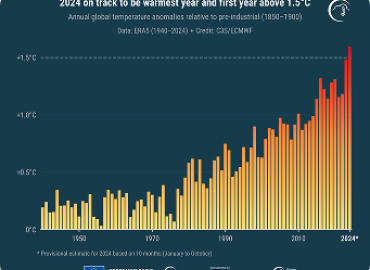
Climate projections are simulations of Earth’s climate for future decades (typically until 2100) based on assumed 'scenarios' for the concentrations of greenhouse gases, aerosols, and other atmospheric constituents that affect the planet’s radiative balance
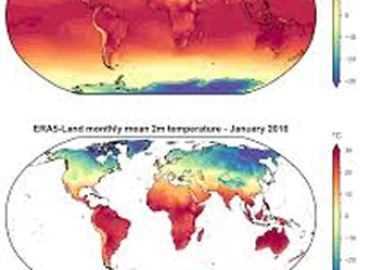
Climate reanalyses use past observations and models to create consistent, detailed records of climate variables over time. They are widely used in geophysical sciences, offering 3D data at sub-daily intervals.