Qatar has demonstrated a consistent commitment to global climate action through a series of significant milestones. From ratifying the UNFCCC in 1996 to launching its National Climate Change Plan in 2021, Qatar has taken steps to align with international agreements, support vulnerable nations, and advance sustainable development. Hosting major climate events and contributing to global funds further highlight its active role in addressing the climate crisis.
March 2022
Qatar hosted the 20th edition of the Doha Forum, under the theme “Transforming for a New Era,” with a core focus on Climate Change and Sustainability.

November 2021
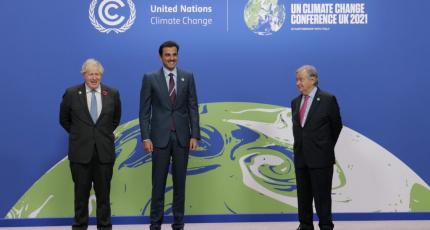
The state of Qatar attended the COP26 conference in Glasgow, where it discussed its plans to reduce greenhouse gas emissions.
September 2021
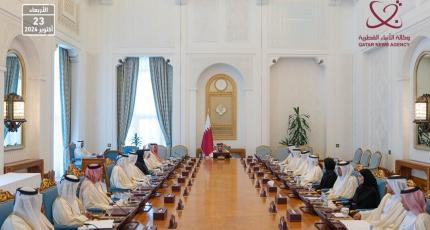
Qatar’s Council of Ministers approved the National Climate Change Plan, where the Qatar National Environment and Climate Change Strategy was launched. This entailed a strategic framework reflecting Qatar’s long-term sustainability goals, and the urgent need to respond effectively to the international climate crisis.
March 2019
The emir of Qatar, HH Sheikh Tamim bin Hamad Al Thani, announced Qatar’s contribution of $100 million to support small developing states to address climate change and their environmental challenges.
April 2016
Qatar signed the Paris Protocol for Climate Change Agreement, which was then ratified in 2017
March 2012
Doha hosted the Eighteenth session of the Conference of States Parties to the United Nations Framework Convention on Climate Change, with more than 20,000 delegates including government officials, UN organizations and civil society members.
March 2005
Qatar signed the Kyoto Protocol, which was an international treaty extended from the 1992 UNFCCC that commits its partners to reduce their greenhouse gas emissions.
March 1996
Qatar ratifies the UN Framework Convention on Climate Change (UNFCCC), in accordance with its long-standing commitment to addressing global environmental challenges.
Qatar has committed to ambitious climate goals under its National Climate Change Action Plan (NCCAP), aligning with Qatar National Vision 2030 and the Paris Agreement. Key objectives include:
-
Image

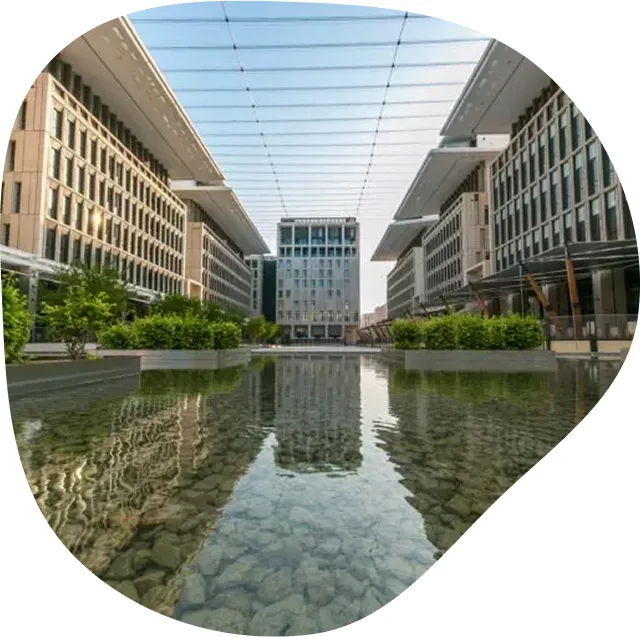
Qatar has successfully designed two sustainable smart cities, Lusail City and Msheireb downtown, which were designed to optimize sustainable urban planning through the application of world-class environmental standards, to promote environmental stewardship and research. A successful example of this is Msheireb Downtown which is the world’s first successful downtown regeneration project.
-
Image

The State of Qatar is highly committed to producing the most innovative and organic research projects, which is why the country has invested in world-renowned environmental institutions such as the Qatar Science and Technology Park, Qatar Environment and Energy Research Institute (QEERI), etc. Such research institutions ensure constant innovation and development in the fields of environmental preservation, sustainability, and technology.
-
Image

Qatar has launched significant green public transportation and infrastructure projects in the past few years. The biggest project to launch has been the Doha Metro, which has gained significant appraisals as one of the most multimodal transportation systems in the world that is reliable and eco-friendly.
-
Image
The Qatar National Dialogue on Climate Change (QNDCC) is Qatar’s premier national platform on climate action and policy. Held annually, QNDCC serves as a critical preparatory forum ahead of the United Nations Climate Change Conference (COP). Scheduled to take place approximately one month prior to COP each year, the Dialogue brings together key stakeholders from across government, industry, academia, financial institutions, civil society, and youth to engage in informed, solution-oriented discussions.
The National Dialogue plays a vital role in aligning national priorities and strengthening Qatar’s unified voice on the global climate stage, ensuring that all relevant entities are equipped, informed, and coordinated in the lead-up to COP. By fostering cross-sector collaboration and promoting knowledge exchange, QNDCC supports the development of a cohesive, actionable national strategy on climate change and enhances Qatar’s leadership and effectiveness in international climate negotiations. Each year, QNDCC partners with strategic entities to enhance its impact (2023 with the Embassy of France and 2024 with the Embassy of Germany). These collaborations support bilateral relationships and create unique synergies in sustainability, leveraging diverse expertise and resources to drive global climate action.
-
Image

QNDCC supports Qatar National Vision 2030’s sustainability goals, driving discussions and initiatives that align with national priorities.
-
Image

QNDCC offers insights and recommendations to boost local sustainability projects, community engagement initiatives and partnerships.
-
Image

QNDCC facilitates policy-making for environmental risk mitigation and economic growth, aligning with Qatar’s diversification and sustainability goals.
-
Image

QNDCC fosters multi-sectoral collaborations, empowering individuals to embrace and adopt sustainable practices and contribute to climate action.
-
Image

QNDCC showcases Qatar’s global environmental commitment, highlighting its role in the fight against climate change and collaboration with the international community.
Eu aliquam metus eget eros bibendum et nunc ultricies. Velit sagittis pellentesque amet vitae egestas eget sit cum. Non facilisi libero id quis interdum. Purus dis aenean amet bibendum id adipiscing semper massa. At cursus ac in etiam scelerisque gravida euismod.
Sed faucibus in cras feugiat. Pharetra amet malesuada mattis scelerisque purus gravida mauris egestas. Et tristique tellus a tristique augue eget vel at facilisis. Morbi tincidunt amet ipsum amet pulvinar aliquam lacus feugiat. Orci commodo et laoreet duis proin lectus dui euismod eu.
-
Image
-
Image
-
Image
-
Image

-
Image
-
Image
-
Image

-
Image
-
Image

Id egestas tellus nunc volutpat justo cursus purus morbi magna. Lobortis placerat eget consectetur nisl lectus in arcu condimentum aenean. Morbi lobortis sodales tellus mi tristique orci in adipiscing nibh. Volutpat nunc nullam tellus tortor. Nibh id nibh vitae eu sapien etiam pellentesque sociis.